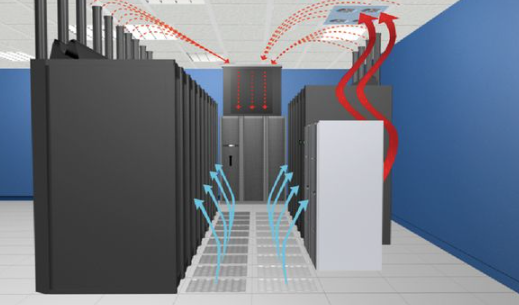
Cooling technologies for servers blend air, liquid, and immersion to meet varying demand. Air remains cost-efficient for moderate densities, while liquid and immersion unlock higher performance with concentrated heat paths. Strategic deployment pairs modular design with workload-aware cooling, enabling scalable resilience. Predictive analytics and autonomous orchestration promise adaptive, efficient systems. The path forward invites bold choices in density, reliability, and heat reuse, inviting further exploration of where efficiency converges with performance.
What Cooling Technologies Do Servers Use Today
Modern data centers deploy a mix of active and passive cooling technologies to manage escalating server heat. The landscape includes air, liquid, and immersion approaches, selected for efficiency, reliability, and scalability. This framework targets improved server efficiency and enables heat reuse. Strategic deployments optimize energy use while maintaining performance, unlocking flexible, freedom‑oriented infrastructure that adapens to evolving workloads and environmental goals.
Choosing Between Air, Liquid, and Immersion Cooling
Choosing between air, liquid, and immersion cooling hinges on a balance of cost, density, and risk, with each method offering distinct leverage on efficiency, reliability, and scalability. The decision frames cost efficiency and maintenance tradeoffs, weighing upfront capital against ongoing servicing. Air suits moderate needs with simplicity; liquid and immersion target density and long-term efficiency, demanding disciplined integration and risk management for sustained freedom.
Tailoring Cooling to Workloads and Densities
Tailoring cooling to workloads and densities begins with aligning thermal strategy to workload profiles and rack realization. The approach articulates spacing, heat paths, and cooling cadence, enabling modular, scalable responses. It embraces workload tailoring and density aware insights to optimize energy use and performance. This strategic alignment empowers freedom to evolve infrastructure, balancing capacity, efficiency, and resilience.
Emerging Trends Shaping Data-Center Cooling
Emerging trends in data-center cooling point toward a convergence of precision and adaptability, where predictive analytics, modular architectures, and advanced liquid and air cooling converge to redefine capacity, efficiency, and resilience.
This trajectory favors driven ventilation, hybrid strategies, and sustainable materials, with nanofluid alloys enabling finer thermal control, while autonomous system orchestration ensures resilient, cost-efficient operation and freedom to scale.
Frequently Asked Questions
How Do Cooling Methods Affect Server Longevity and Warranty Terms?
Cooling methods influence server longevity by reducing thermal wear and ensuring stable operation, while warranty terms often hinge on recommended cooling practices and thresholds; strategic implementations can extend life, preserving freedom to deploy scalable, resilient infrastructures.
What Are the Environmental Impacts of Different Cooling Options?
Environmental footprint varies with cooling choice; liquid immersion minimizes energy use, while air cooling relies on fan efficiency. The future weighs refrigerant usage carefully, prioritizing low-global-warming options, scalable designs, and transparent lifecycle assessments for freedom-loving stakeholders.
Can Cooling Choices Influence Data-Center Uptime Guarantees?
Cooling choices can influence data-center uptime guarantees by shaping resilience, maintenance cadence, and fault response. The ideas span scalable, redundant systems; avoid dead ends with unrelated topics, while embracing freedom-driven strategies that prioritize reliability and continuous operation.
See also: Cookieless Tracking Explained
How Is Refrigerant Leakage Risk Managed in Liquid Cooling?
Refrigerant leakage risk is mitigated through proactive refrigerant monitoring and strict leakage containment. Visionaries see continuous sensors, rapid shutoffs, and robust containment protocols as strategic safeguards, ensuring freedom to innovate while preserving uptime and environmental responsibility.
What Deployment Timelines and Cost Implications for Retrofits Vs New Builds?
Retrofit timing hinges on existing asset life; retrofit costs compete with new build timing and costs, favoring phased enhancements. New build timing aligns with scalable architecture, while strategic investment prioritizes freedom to adapt; both seek long-term resilience and innovation.
Conclusion
As data centers evolve, cooling technologies converge into a strategic spectrum—from efficient air to high-density liquid and avant-garde immersion. The trajectory favors modular, adaptive architectures guided by workload density and resilience. Objection that “one size fits all” persists; yet the future proves otherwise: mixed ecosystems optimize energy use, cost, and reliability. By embracing predictive analytics and autonomous orchestration, operators achieve scalable performance, reuse waste heat, and stay resilient amid rising compute demands.


 By
By